

Home / AI News
Last updated Nov 2, 2026 · Beijing time
AI News
Official announcements, media reports and discussion on X. Each story links to the original, and the original is authoritative.
Latest
Summaries by CyberMedia editors · the original is authoritative
Nov 2, 2026
-
 Anthropic updates Claude to stop it from recreating existing video games
Engadget reports that an X user spotted new lines in Claude's instructions: it should help build original games, genre games, and games based on a user's own designs and assets, but not recreate a specific existing game, even under a new name or a claim of originality. Addy Osmani of Anthropic's technical staff confirmed the change on X, saying IP infringement with Claude breaks the usage policy, that original and genre games are unaffected, and that the company will keep tuning the balance. The change follows a wave of AAA games decompiled with AI help and released as browser fan projects. The report also notes Anthropic's earlier settlement with authors over training data.
-
 Guest post on Terence Tao's blog: how mathematics should adjust to AI
In a guest post on Terence Tao's blog, mathematician Frank Calegari describes OpenAI's October 6 release of more than 700 research papers as a turning point: AI can now make groundbreaking contributions across mathematics, yet the papers are badly written, ignore attribution norms, and some are wrong. Pointing to the classification of finite simple groups, he warns against declaring a field finished once its famous problems fall. Rather than focus on the companies, he argues mathematicians should change what they control: evaluate all work as if AI-assisted, hire through in-person conversations, demand more from journals, broaden graduate training, give better seminars, and take responsibility for vetting AI results. Choosing worthwhile problems, he says, may matter more than producing proofs.
-
 Brave upgrades Ask Brave: simple questions answered about 70% faster
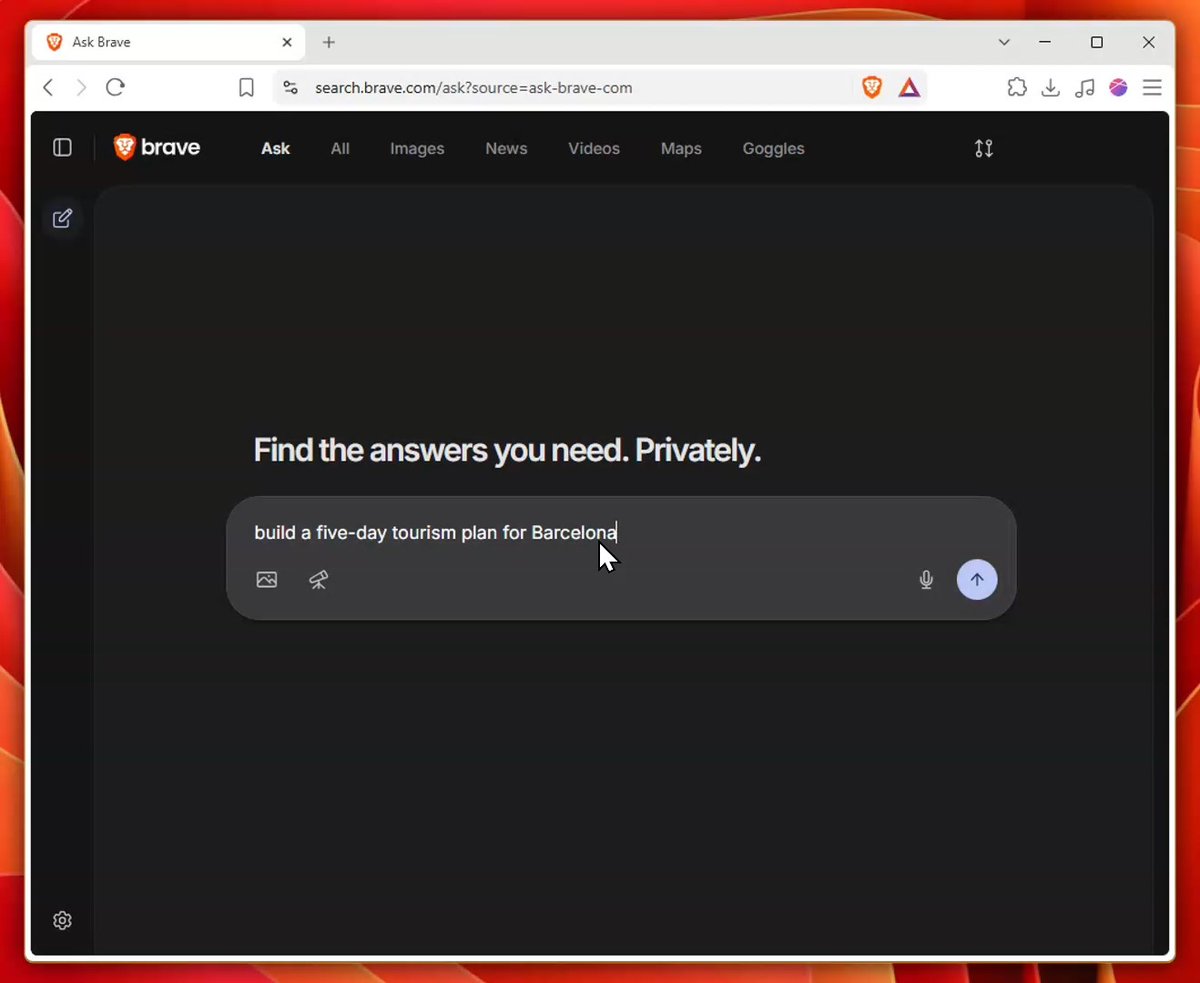
Brave announced on its official X account that Ask Brave, its AI answer feature, has become faster and smarter. Answers to simple questions arrive about 70% sooner, and when building an answer it now researches the query in more depth, drawing on ten times as many search results. According to Brave's website, Ask Brave is the AI chat built into Brave Search. It handles both quick questions and deeper research, pulls content from many pages into one answer shown right on the results page, and works on desktop and mobile. It runs on Brave's independent index, with a privacy focus, no profiling, and cited sources. Brave says more improvements are coming. The post includes a short demo video, available via the source link.
Nov 1, 2026
-
 50 AI agents tried to build a civilization in Minecraft and fell into bureaucracy
Tom's Hardware reports on researchers testing AI agent swarms in several Minecraft modes. In a test called Civ50, 50 GPT-6.1 Sol agents had three hours to build a thriving civilization, but after zombies hit hard on the first night they gave up many big plans, played it safe, and drifted into bureaucracy: four agents took 11 minutes to name one designated fertilizer operator for a single unit of bone meal. In Bed Wars, 10 GPT agents faced 10 Claude Opus 5.5 agents; GPT was more aggressive, Claude more defensive, and when a tool bug blocked block-breaking, GPT found workarounds while several Claudes decided it could not be done. GPT won Mindustry 6-1. The researchers compare this to behavior seen with coding agents.
-
 Chatbots are leading hikers astray
WIRED, republishing High Country News, reports that more hikers are planning trips with AI chatbots, sometimes with dangerous results. Three 20-year-olds on Mount Shasta relied partly on Google's Gemini, brought too little food, overestimated their fitness, descended in the dark, and had to call for help. In British Columbia, a 16-year-old who planned with Claude was rescued by helicopter, though he also used Google Maps and AllTrails. Grand Teton says visitors using AI for trip information rose from zero to 26%. Experts warn chatbots can sound confident while being wrong and may lead people to stop thinking for themselves. Their advice: check official maps and sites or ask a ranger.
-
 Apple CEO: we don't want to ship AI for AI's sake
TechCrunch reports that Apple CEO John Ternus, speaking with WIRED's Steven Levy, defended Apple's position in AI. Apple has often been described as lagging, and a more capable Siri arrived only this summer. Ternus, who took over as CEO in September, acknowledged that views on this differ but said he is comfortable with where the company stands. Apple will certainly use AI in new products, he said, but not release features simply to have AI in them; done well, users should not have to care whether AI or conventional software is doing the work. Asked whether agents might make apps unnecessary, he described building products as fundamentally human and personal work.
-
 Judge allows NAACP lawsuit over xAI data center pollution to move forward
TechCrunch reports that a federal judge denied xAI's motion to dismiss an NAACP lawsuit. Filed by the Southern Environmental Law Center for the NAACP, the suit says xAI set up and operated 35 or more gas turbines, along with other polluting equipment, at its Colossus data center near Memphis without required air permits, violating the Clean Air Act. xAI argued the turbines were exempt as mobile sources and that the plaintiffs lacked standing. Judge Debra M. Brown ruled the plaintiffs have standing, the turbines are not mobile sources, and the citizen-suit provision is constitutional, so the case proceeds. A similar DOJ motion was denied earlier this month.
-
 OpenAI reportedly lowers its new funding round target to $20 billion
TechCrunch, summarizing multiple reports, says OpenAI's latest round is falling short. Earlier reports had OpenAI seeking $30 billion, first at a $1.4 trillion valuation and later at $1.25 trillion, ahead of a planned IPO. The Financial Times says the goal is now $20 billion, with a smaller first close, led by UAE investors; a later offering for wealthy individuals could bring it to target. The Wall Street Journal puts the amount secured so far at $11 billion and says some large investors were lukewarm. Timing may be part of it, as Wall Street grows wary of heavy AI infrastructure spending. TechCrunch has asked OpenAI for comment.
-
 A Verge editor used Claude to turn a $50 ESP32 board into a homemade AI pendant
The Verge senior editor Sean Hollister, who has no coding experience, bought a $50 Waveshare ESP32-S3 devkit with a 1.75-inch touchscreen, one of the boards Meta suggests for building a Muse Gadget. He had Claude read Meta's code on GitHub to pair it with the Muse phone app, but the stock build did little. Over several Claude Code sessions he added a conversation history page, spoken replies with an ElevenLabs voice, a remote camera shutter and viewfinder, a working pocket-watch face, and a Tamagotchi-style pet game. He says he cannot vouch for the code, kept the device on guest Wi-Fi for privacy, and argues the real value of dedicated hardware is that you can program it.
Oct 31, 2026
-
 NVIDIA: AI agents now steer the Allen Telescope Array for SETI
In an X post, NVIDIA AI said AI agents have started operating the Allen Telescope Array in Northern California as part of the hunt for possible extraterrestrial signals. NVIDIA's blog explains that the SETI Institute and Breakthrough Listen use agentic AI in daily observing: from one natural-language request, agents can steer the antennas, calibrate and correct incoming data, and run AI models on the live stream. Built on NVIDIA Holoscan and CUDA-X libraries, the system streams several terabits of sensor data each second directly into GPU memory and handles 2.4 terabits per second on RTX PRO 6000 Blackwell GPUs. It has made the first real-time AI detection of a pulsar in the Crab Nebula, and the team is now evaluating open models such as Nemotron.
-
 Google DeepMind: Gemini-based PlanAssist cuts planning assessment time by up to 58%
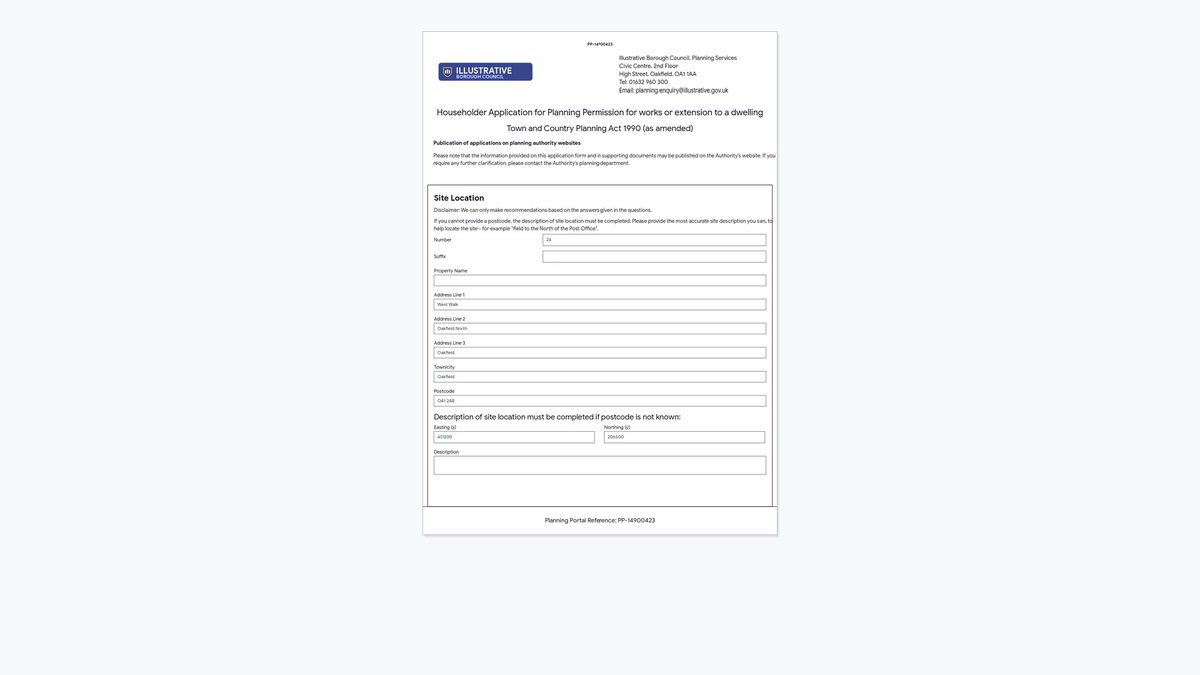
Google DeepMind says PlanAssist, a Gemini-based planning tool, will be offered to 12 more local planning authorities in England. Built with the UK government, Google Cloud, and Faculty, it validates application documents and drawings, checks them against heritage constraints and local and national policy, surfaces earlier objections, and drafts cited reports; officers keep the final say. Piloted since June in Barnet, Camden, and Dorset, it cut officer time on householder assessments by 58% on average, and over 70% of its reports were approved with no edits. A 12-month beta brings the total to 15 councils, with plans to offer it to all councils in England in 2027 if testing goes well.
-
 Cisco Talos details VOLTA, an infostealer that uses LLMs to rank victims by value
Cisco Talos details VOLTA-AUTODOXER, a self-deleting Windows infostealer. It takes browser passwords, cookies, cards, crypto wallets, chat and gaming sessions, cloud keys, and Wi-Fi passwords, then uses stolen Gmail and food-delivery sessions to confirm a victim's address and habits. It bundles this evidence and sends it through OpenRouter to an LLM that scores how much the victim's holdings could be worth to the attacker, falling back to other models if one refuses. There is no attacker-owned infrastructure, and it appears to be sold as a builder. Talos advises restricting headless Chrome launches, preserving the debug log, revoking tokens, changing passwords, and moving wallet funds.
-
 Meta says Muse has over 10 million users, but businesses see little agent shopping so far
WIRED reports that Meta's AI agent Muse was a hot topic on recent earnings calls. Mark Zuckerberg said Muse has been activated by over 10 million users across the US and Canada, and more than a quarter of them shop with it, beating expectations; Meta plans to charge businesses a transaction fee. Yet executives at about 50 companies saw little near-term disruption: DoorDash said agent orders number only in the hundreds, Hilton said agent bookings are negligible, and eBay described the volume as tiny. Some, like Chipotle, are fixing their sites so agents can check out. Amazon blocked Muse last month but now expects to work with outside agents, and Bank of America warned customers not to share logins with AI assistants.
-
 An AI agent injected a gene therapy into a live mouse's brain
WIRED reports that Gabriel Ocana Santero, CEO of San Francisco biotech Exin Therapeutics, had an AI agent carry out a brain injection on a live mouse with epilepsy using a custom surgical rig. A veterinary surgeon first performed the craniotomy; the agent then chose a gene therapy from 19 options, picked the brain region and coordinates, and controlled the robotic arm, needle, volume, and speed. Claude Opus 5.5 refused at the injection step, so the team switched to Claude Sonnet 5. Safeguards included human approval and an emergency stop. A coordinate glitch was fixed by a separate agent, and the procedure ran just over an hour. The mouse is recovering, and the team says human oversight remains key.